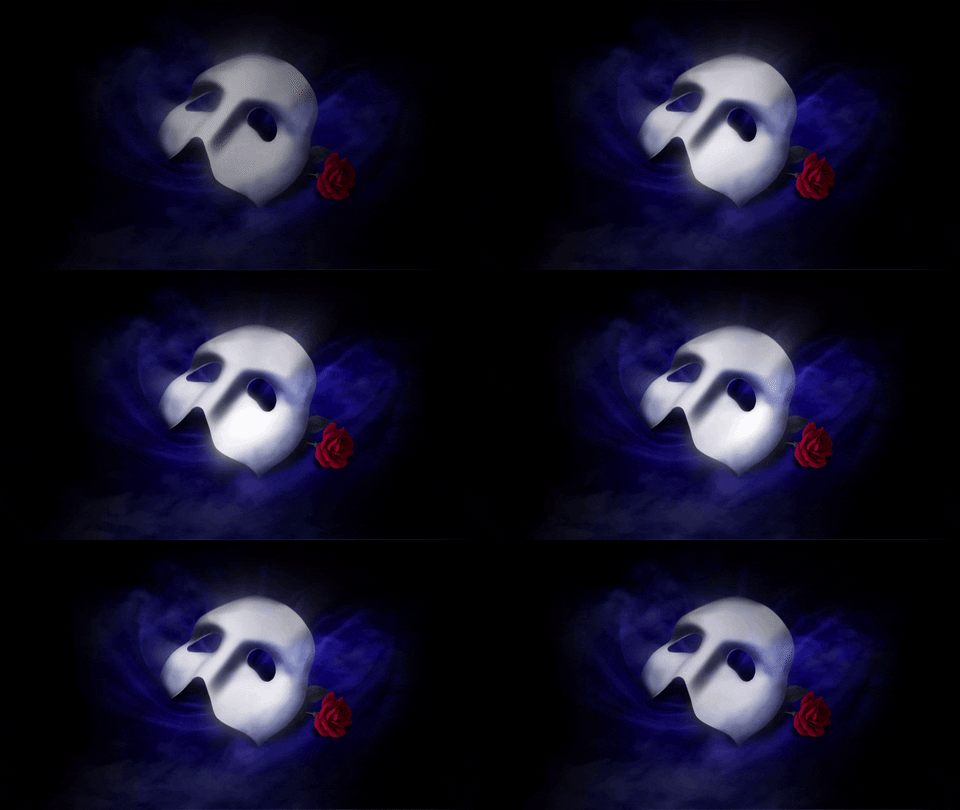
The best production posters start with key artwork
But what is key artwork? (Not a silly question.) It’s the visual that does the heavy lifting, and the foundation for all of your promo materials (flyers, bus wraps, decals, you name it). It’s the reason people take the time to read your lovingly written blurb/scan your beautifully crafted QR code/ACTUALLY book a ticket. It’s sometimes called the hero image or a key visual as well.

So how do you go about creating one? As the (self-annointed, one of many) queen of eye-catching posters, who’s also done a few TV & film projects and a ton of branding jobs, I know my way around a concept and what you need to make attention-grabbing artwork. So let’s get into it.
Have a clear idea of what you need to convey
The more clearly you can explain what your production’s all about, the easier it is to nail the artwork. Think about things like:
- Your production’s theme/tone. Is it funny? Scary? Full-on action?
- Your target audience.
- How you want people to feel when they see your poster or other promotional materials.
- What you hope the final artwork will look/feel like. E.g. theatrical, polished, chaotic, intimate, funny, surreal, rough and ready, confrontational, etc.
- If your director/producer has any key thoughts they would like you to keep in mind at this stage.
Think about application
What assets do you need? Actually, the simpler question might be ‘Where do you need to appear?’ Your artwork can end up on anything from posters to t-shirts, mugs to magazines, and billboards to social media thumbnails. If you know this upfront, you can compile a more sensible list of assets, and your designer will make sure that your artwork can flex for every application (NB not ALL of the info needs to be included on everything!).
Great photos are half the battle
If you need images and budget allows, work with a pro photographer, preferably after working with a designer to refine concepts. Make sure you’ve shared your brief with them, and that everyone is on board with the list of shots you want to achieve. Gather any costumes, props, and styling you need ahead of the shoot to minimise any Post-Production PSD Wrangling (patent pending.)
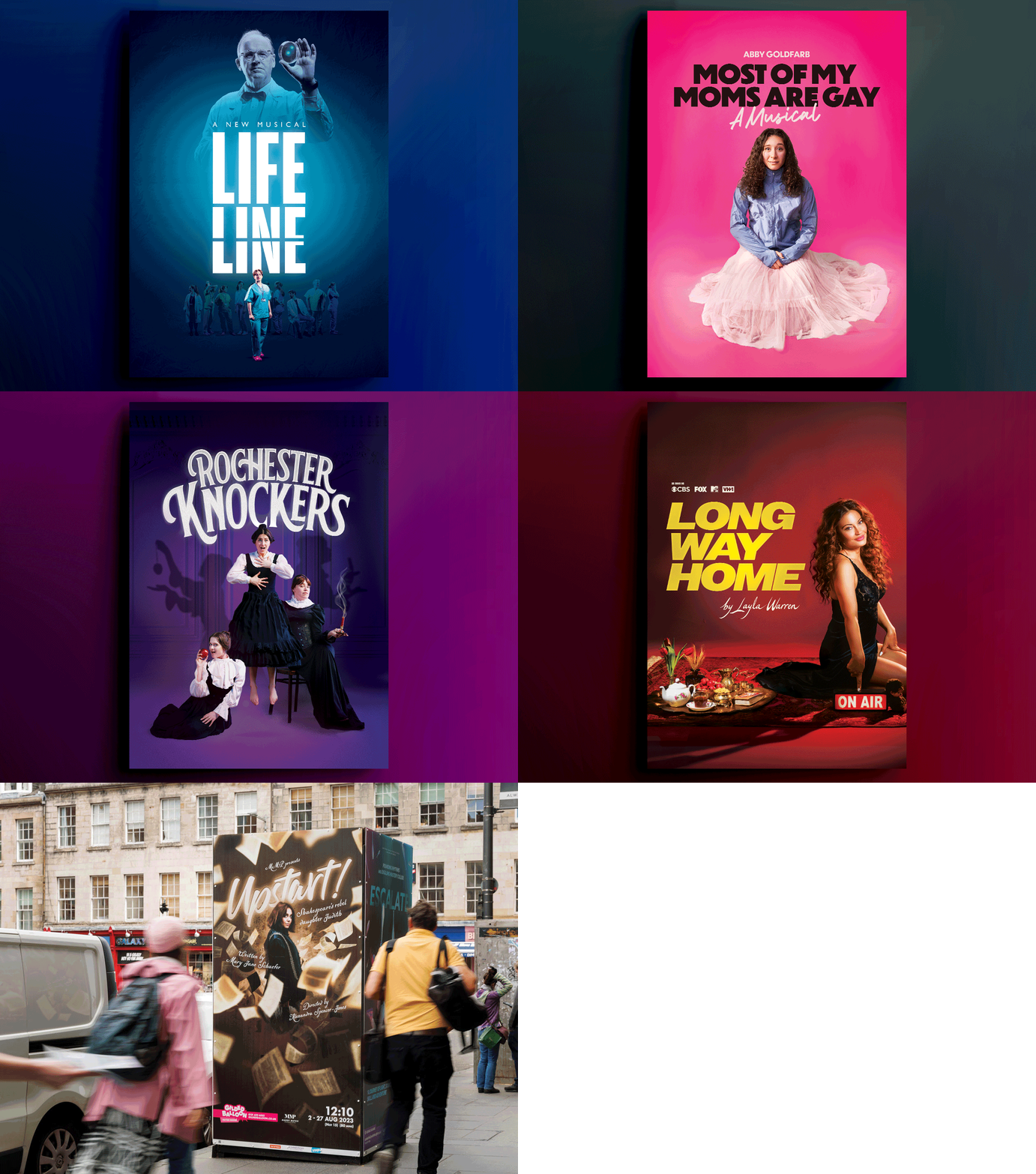
No pics? No problem
If in doubt, or you have limited funds, you could work with stock imagery or go for a more graphic or illustrative approach. Keep things simple. Focus on making sure you have lots of space and that everything looks neat (clutter is the death of clarity!). As with professional photographs, be sure you have appropriate formats and dimensions, i.e. portrait, landscape and square, so a graphic designer has flexibility.
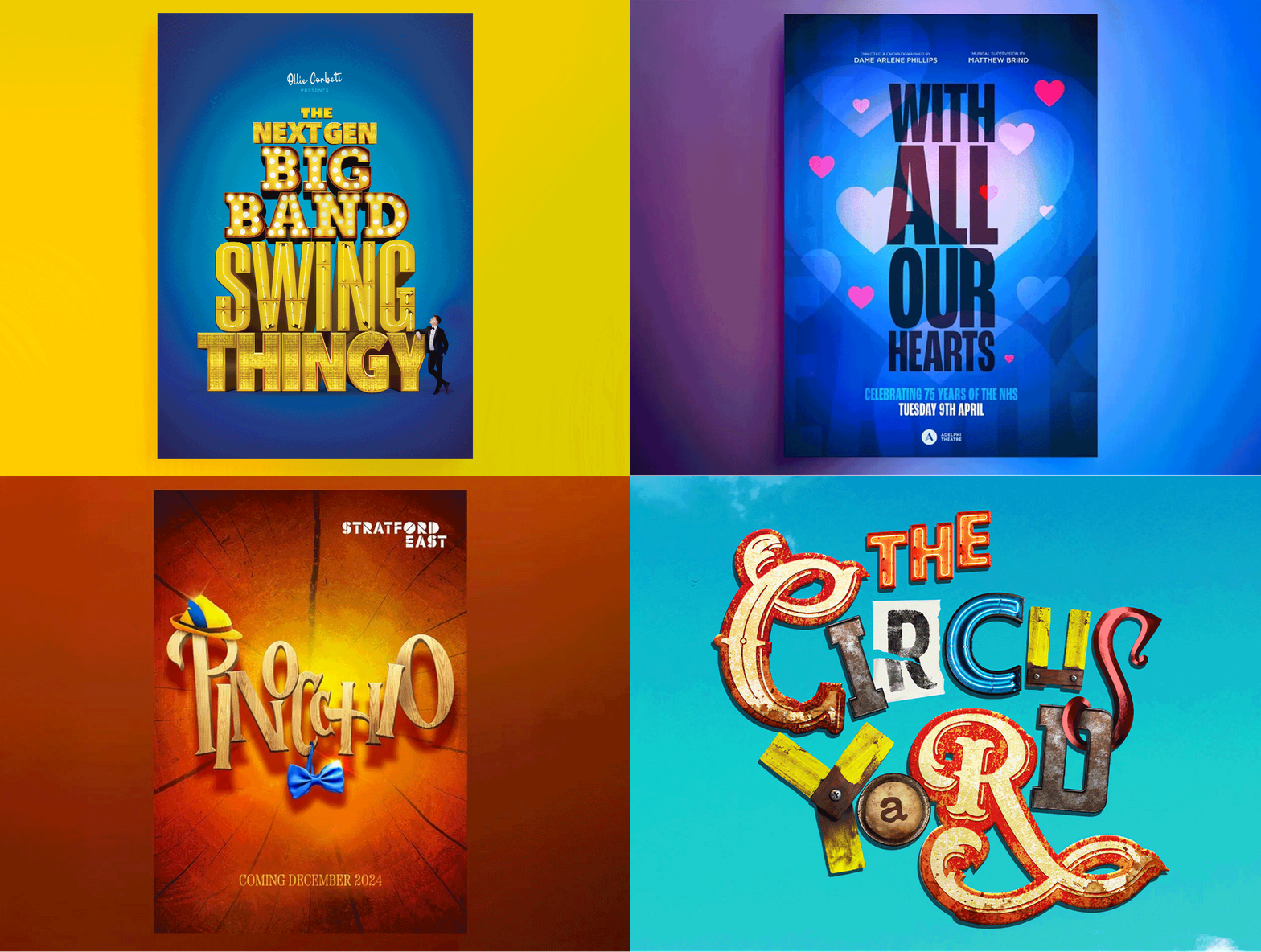
Getting from concept to creative
The process can vary job to job, depending on budget and production. I’ve found that this process works for most people.
- We start with a chat where you explain your vision. There’s bound to be a few questions to make sure I fully understand before I get to work.
- I’ll create 2-3 moodboard concepts for you to review before perfecting your favourite one. I allow for two rounds of amends for this.
Once you’ve signed off the concept, we’ll move on to the poster (plus any other assets), which involves:
- Working up a rough draft, with a couple more rounds of tweaks.
- Creating your full high-res poster.
- Rolling out the final version in all of the sizes you might need for print and web.
Beware of AI
Big surprise, I’m not a fan of AI-generated artwork. Tools like ChatGPT can come in handy for gathering inspiration, fact-finding, and taking the edge off writing a brief. Generative tools in Photoshop are great for tweaking parts of photos and smoothing out the editing process, if needed. But when your aim is to stand out, relying on AI for originality is risky. It also can’t make print-ready files (yet), and the image quality is often too low-res to use.
⚠️ AI references aren’t usable as-generated. They’ll very likely result in a time-sapping death spiral where the designer isn’t able to match your AI mock-up (nobody can, and it’s often not the best solution practically and technically), endless dissatisfaction ensues, and things get expensive. It’s always best to work with what your designer creates, and chat through feedback together so they can work out the best solution to your query, rather than supplying endless new AI-generated images that don’t take design limitations into account.
Are you taking a show to the Edinburgh Fringe (or any of the Fringes – Brighton, Adelaide, the sky’s the limit), or thinking about it? I’ve written about the dos and don’ts of designing a poster that will make the process far less scary.
If you’re interested in key artwork design specifically, book a quick no-strings chat!